EnerJ-meeting Lyon 2026 recap: Octowise at the Start-up Village
Start-up Village, Palais de la Bourse, Tuesday 15 September 2026: a 360° platform hosted on the customer instance, and what visitors came to check after the measurement.
Octowise Team
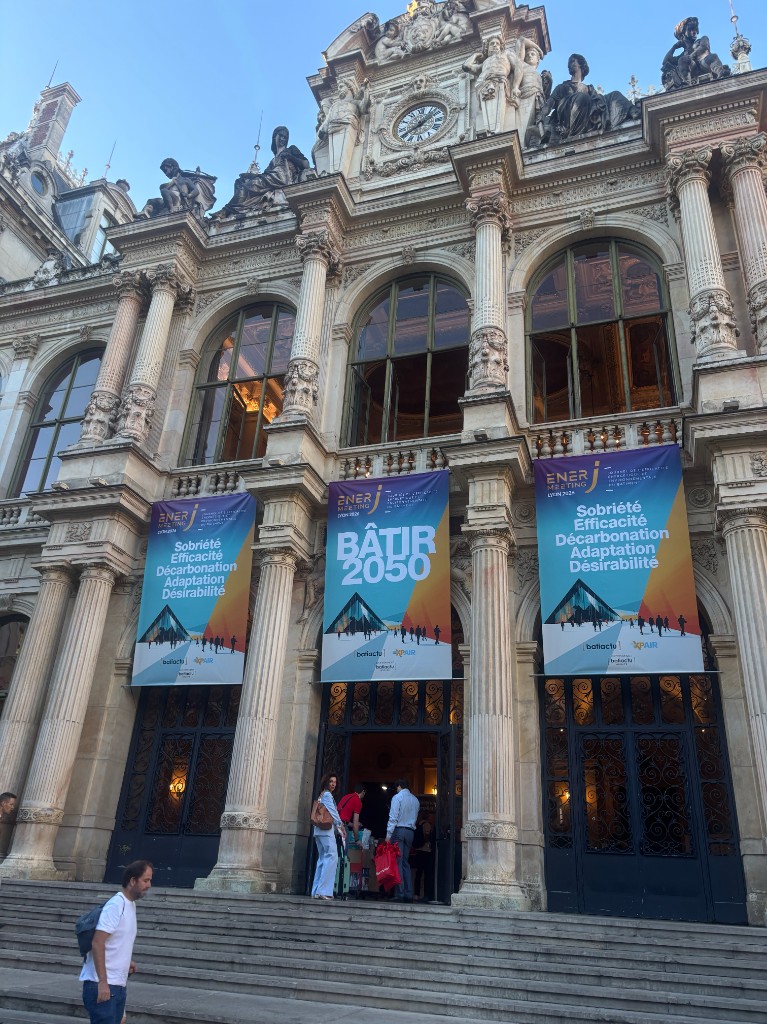
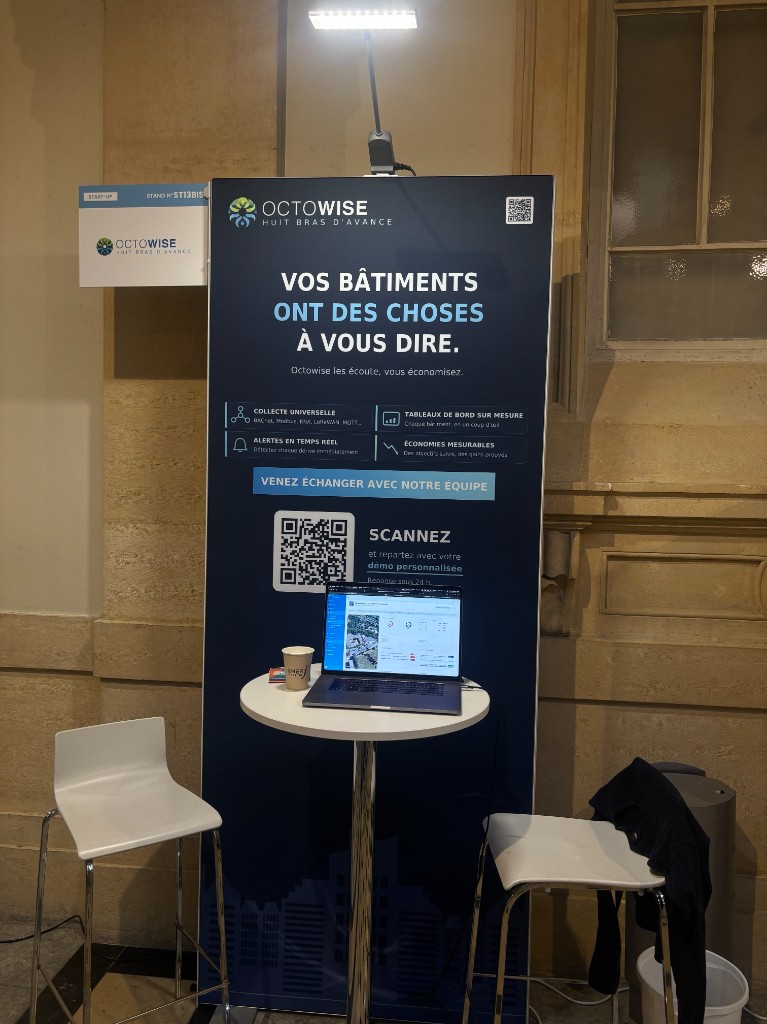
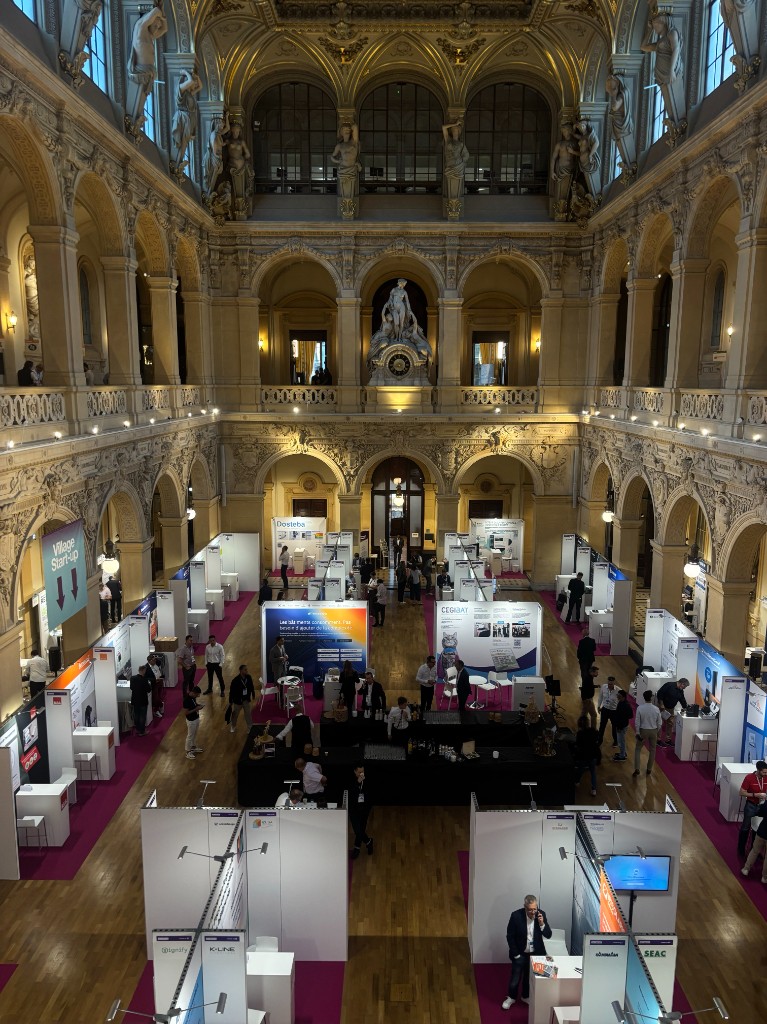
Octowise, developed by Programini, exhibited at the Start-up Village of EnerJ-meeting Lyon, stand ST13bis, on Tuesday 15 September 2026 at Palais de la Bourse. One sentence on the roll-up banner: “Your buildings have things to tell you.” That is the conversation we came for. Here is what it says about where tertiary portfolio managers stand today.
The Start-up Village, a place for specifiers
EnerJ-meeting is not a generalist trade show: one day, one venue, decision-makers. Building owners, project managers, local authorities, engineering firms, and manufacturers meet at Palais de la Bourse around building energy and environmental performance, along the 2026 thread “Build 2050: sufficiency, efficiency, decarbonization, adaptation, desirability”.
The Start-up Village sits in the main hall, between the exhibition aisles and the conference rooms. Foot traffic is fast: two minutes to grasp what a product does. That constraint is a good filter, because it rules out the exhaustive demo and forces you to answer one question at a time.
Almost nobody stopped to ask whether we had charts. Everyone has charts, often from three different tools. The question came after the measurement: who sees the drift, who raises the alarm, and where does the decision land? Right after came hosting: do the data stay with us?
Octowise is a 360° platform. It brings together, in one record, what today lives scattered across spreadsheets and supplier portals: portfolio, data sources, compliance, invoices, actions, field work. Eight arms, one head, building on the infrastructure already in place. The instance is installed at the client's: consumption, invoices, regulatory files, and identities stay under their control.
BACS decree and BMS: the programme's underlying question
The programme set the tone. In room 1: “BACS decree: supervise, control, optimize consumption”, then lighting management against the decree. In room 3: “Turnkey BMS… is it enough?”, followed by “Monitoring, IoT, and BMS: which complementarities?”.
That programme question names Octowise's job. The platform shows whether a building has drifted from its own behaviour, how it compares with the thirty others in the portfolio, and whether the corrective action was carried out, at what cost. Compliance and real performance meet in the same portfolio record, at estate scale.
On a building record, that means four concrete things:
- A structured BACS register on the building record, not a PDF annex.
- BACS AI analysis distinct from building analysis, based on the confirmed ADEME DPE.
- Multi-protocol collection (BACnet, Modbus, MQTT, OPC-UA, APIs, Enedis) to complement what is already there.
- The compliance view to see, across the portfolio, what is ready and what is blocked.
Four topics, one building
The first topic is detection. A spike at 2 p.m. on a Tuesday is not an anomaly if it matches the building's usual profile. The seasonal signature learns that profile (month × weekday × hour) and avoids the noise of fixed thresholds, while operating conditions cover the opposite case, the business rule you already know: a duration, a time window, a recurrence. The alert then goes to the web, email, or mobile depending on the recipient's role.
The second is the regulatory file. As long as the tertiary decree, OPERAT, BACS, and the DPE live in a separate binder, a site's compliance status does not really exist: it gets reassembled once a year. In Lyon, climate zone H2, climate adjustment through degree days is not academic detail, since a poorly calibrated reference year skews the 2030 target before the first declaration.
The third is cost. Consumption is visible; real cost, invoice by invoice and building by building, much less so. Reading energy and works invoices automatically only matters if it updates the actuals on the action plan the spend belongs to.
The fourth is scale. A local authority, a real-estate firm, or a campus is no longer managed site by site: you need to know where to start. The portfolio map colors the estate by DPE, AI score, alerts, or source availability, dashboards give each role its own reading, and the field works from the native mobile app while headquarters stays on the web.
What we showed at the stand
A laptop, a roll-up banner, two stools: the format forces you to start from a case rather than a table of contents. A multi-site map on screen, then one building record, then a drift and the alert it triggers. The rest of the product follows from there, once the person in front of you has recognized their own problem.
The point that comes up earliest, often before the demo itself, is hosting. Octowise is installed at the client's. Portfolio data stays on their instance, inside their security perimeter. That is an architecture choice: the manager keeps control of the series, of access, and of reversibility.
Two other points follow in the demos. Collection adapts to the protocols and suppliers already in place. The AI learns each building's own behaviour, which makes it usable across a heterogeneous portfolio without manual tuning site by site.
The QR code on the banner did not point to a brochure but to a tailored demo, with an answer within 24 hours. That is the logical extension of a one-day event: two minutes are enough to qualify a topic, not to settle it. What settles it is the same demo run on your own portfolio.
The questions that keep coming, in Lyon and elsewhere
A trade show is also a stress test, and the hard questions repeat from one meeting to the next. They rarely concern features:
- Compatibility with what exists: heterogeneous sources, legacy protocols, equipment operated by a third party.
- Data reliability: a meter that drops out, an unavailable source, and what happens to the analysis in those cases.
- AI accuracy: how many false alerts, and over what learning period.
- Hosting: the instance lives at the client's, the data stays under their control, and it gets back out through MCP, OData, and integration keys.
- Total cost: the price of the platform against savings that are actually measured, not estimated.
After Lyon, keeping the conversation going
None of these can be settled in one sentence at a stand, and that is just as well. They frame the real subject, which is proof: an objection raised early beats a pilot that stalls six months in.
EnerJ-meeting continues: the Paris edition is announced for 23 February 2027 at the Carrousel du Louvre. Before Lyon, our announcement post set out the stand and the demo path. This recap tells the conversations that followed.
Thanks to the EnerJ-meeting team for the organization, and to everyone who stopped by the stand. If you passed by too quickly, or not at all, the online demo follows the same thread, on your protocol mix and your OPERAT and BACS deadlines.